Monday to Thursday 7:30 AM to 5:00 PM, Friday 7:30 AM to 3:00 PM. 3825 Perkins Rd, Baton Rouge.
(225) 343-3427Get directionsBrake repair is something every Baton Rouge driver needs sooner or later, and the stop-and-go traffic on Perkins Road and College Drive brings it sooner. At Gordon & Sandifer, our ASE certified technicians inspect the whole brake system on cars, SUVs, minivans and light pickups, then explain what is worn and what still has life left.
You get a clear estimate and a plain answer about what needs attention now and what can wait. Nothing gets replaced until you say yes, and we keep you posted while we work. That plain dealing has kept us on Perkins Road for 70 years, and brakes are one part of the auto repair services we handle as a shop that can fix the whole car, even after a wreck.
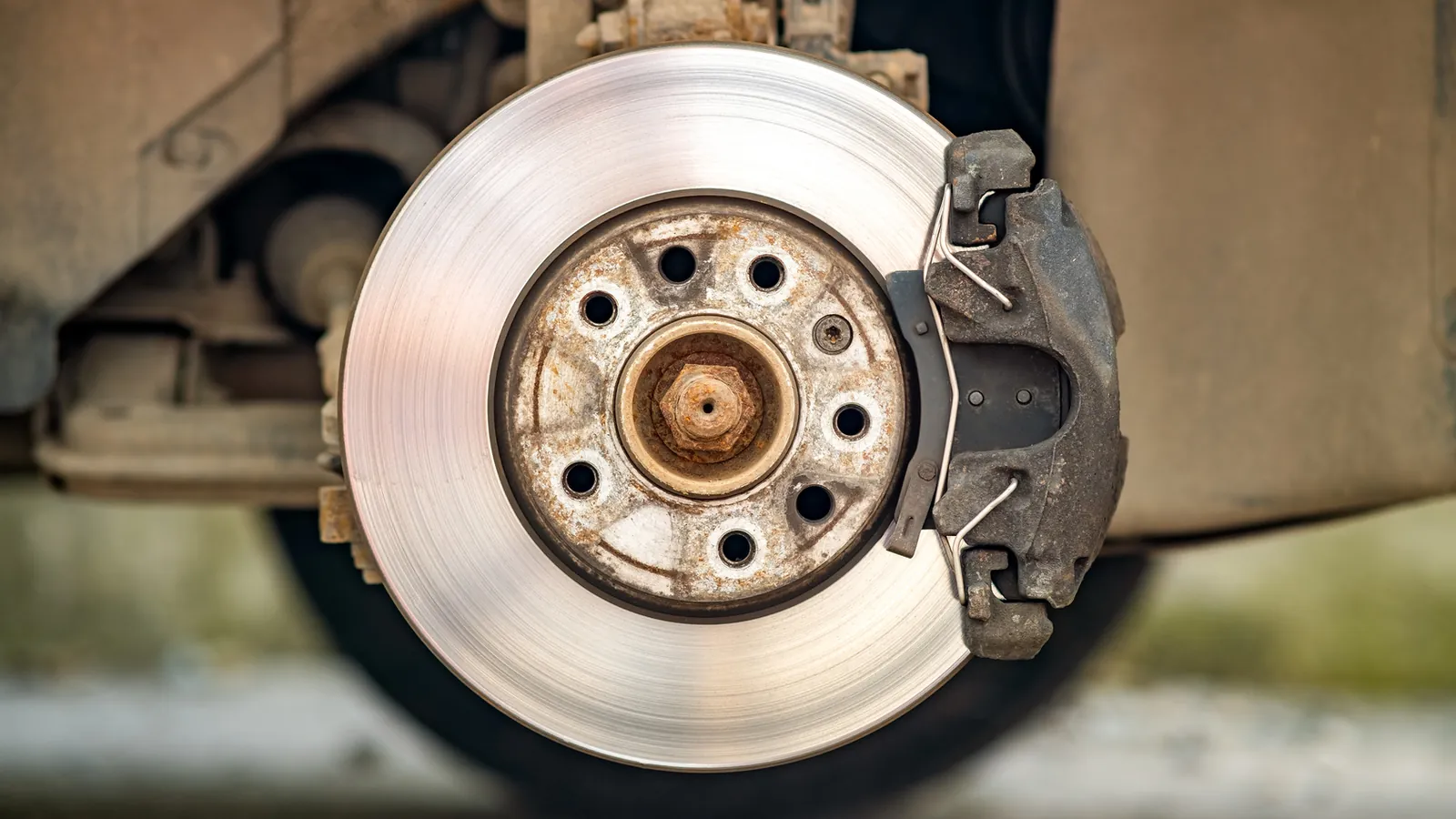
A brake system has more parts than most people think. Pads press against rotors to stop the wheels, calipers squeeze the pads, rubber hoses and steel lines carry brake fluid, and the master cylinder builds pressure when you press the pedal. Good brake repair checks all of them, since one worn part can wear out the others.
Pads are the part that wears fastest. Rotors can often be reused if they are thick enough and smooth. Calipers can stick or leak with age, and the rubber hoses can crack or swell inside, especially after years of Louisiana heat. If a wreck damages a wheel, a brake line or a caliper, our mechanical technicians repair it in the same building where our collision repair team fixes the body, so the car doesn’t go to a second shop.
A high-pitched squeal when you brake usually comes from the small metal wear indicator on the pads, which is built to make noise when the pads are getting thin. Grinding usually means the pad material is gone and metal is rubbing on the rotor. Squealing is an early heads-up, and grinding needs attention soon.
Some noises have simpler causes. A light squeal on a damp morning can come from surface rust on the rotors that wipes off after a few stops. If the sound comes back every time you brake, it is worth a look.
Grinding is the one to act on. Metal against metal damages the rotor quickly, so a pads-only job can grow into pads and rotors. Call us and we will tell you how soon to bring it in.

If the brake pedal pulses or the steering wheel shakes when you slow down, the rotors usually have uneven thickness, often called warped rotors. Heat from hard stops and uneven pad deposits cause it. The fix is resurfacing the rotors if they are thick enough, or replacing them along with the pads.
Pulsing often shows up after a lot of hard braking from highway speed, like coming off I-10 or I-12 into stopped traffic. A shake at speed when you are off the brakes is a different problem. It usually points to tire balance or a worn part covered by suspension and steering repair, and our tire service page explains balancing.
A brake pedal that feels soft, spongy or sinks toward the floor usually means air in the lines, a fluid leak or a worn master cylinder. A car that pulls to one side when braking often has a sticking caliper or a collapsed brake hose. Both deserve a prompt inspection so the car stops straight and firm.
These problems are about hydraulics more than pads, so we look for leaks and check the fluid. A pull can also come from tires or alignment, and if that is the cause we will say so and point you to wheel alignment instead of selling brake parts.
If the red brake light or the amber ABS light comes on, have it checked soon. The red light can mean low fluid, and the ABS light means the anti-lock system has switched off while regular braking usually still works.
Expert tip: Pay attention to how far the pedal travels. If you notice you are pressing farther than you used to before the car slows, mention it at your next visit, even if there is no noise or warning light.
Brake pads in Baton Rouge stop-and-go traffic usually last about 30,000 to 50,000 miles, and rotors often last through one or two sets of pads. Your number depends on the vehicle, the pads, how you drive and where. Mostly highway miles can stretch pads much longer, and constant city stops shorten their life.
Commutes on Perkins Road, Acadian Thruway, Essen Lane and College Drive mean a lot of short stops between lights, and every one of them wears the pads a little. The easiest way to know where you stand is a measurement. We can measure pad thickness when the car is in for an oil change, so you get a heads-up months ahead and can plan the brake job when it suits you.
Heavier vehicles take more braking force to stop, so an F-150, Silverado 1500, Tahoe or Grand Cherokee wears pads and rotors faster than a compact car. Wet roads add to it. Baton Rouge gets about 62 inches of rain a year, and on wet pavement any car needs more distance to stop.
Worn tread can let the tires hydroplane on standing water, and even fresh brakes cannot stop a tire that has lost contact with the road. Leave extra room during a downpour, and stay out of flooded streets.
Expert tip: After driving through deep water, tap the brakes lightly a few times at low speed to dry the pads and rotors. If the pedal still feels different the next day, have the brakes checked.
Brake repair cost depends on what is worn, whether the rotors can be resurfaced or need replacing, the parts your vehicle takes, and whether calipers, hoses or fluid need attention too. Trucks and larger SUVs use bigger parts. At Gordon & Sandifer you get a clear estimate before any work starts, and nothing is added without your okay.
Catching pad wear early keeps the bill reasonable, since pads alone cost less than pads and rotors. We show you the measurements so you can see why we recommend what we do.
Brake fluid pulls moisture out of the air over time, and Baton Rouge humidity speeds that up. Water in the fluid lowers its boiling point and can corrode parts inside the calipers and ABS unit. Many carmakers call for replacing brake fluid every 2 to 3 years, and your owner’s manual lists the interval.
Old fluid looks darker and can make the pedal feel softer after repeated hard stops. A brake fluid exchange pushes the old fluid out of the lines and replaces it with new fluid that meets your car’s specification. We check the fluid and tell you whether it is due.
Expert tip: Check the brake fluid reservoir under the hood when you check your oil. The level drops slowly as pads wear, so a level that drops quickly or a damp spot near a wheel is a sign of a leak worth having checked.
Gordon & Sandifer is at 3825 Perkins Rd, Baton Rouge, LA 70808, close to Acadian Thruway, College Drive and Southdowns Shopping Center. We are open Monday through Thursday 7:30 AM to 5:00 PM and Friday 7:30 AM to 3:00 PM. Call (225) 343-3427 to schedule brake repair or describe what you are hearing.
Brake jobs usually mean leaving the car with us for part of the day. Use our after-hours drop-off on your way home tonight, and we will call you in the morning with what we found. We are minutes from Rouzan, Westdale Heights and Zee Zee Gardens, and directions are on our contact page. Before any brake work starts, we show you the pads and rotors so you can decide with the facts in front of you.