
Monday to Thursday 7:30 AM to 5:00 PM, Friday 7:30 AM to 3:00 PM. 3825 Perkins Rd, Baton Rouge.
(225) 343-3427Get directionsCheck engine light diagnostics at Gordon & Sandifer starts with a simple goal: find out why the light came on and tell you what it means for your car. That amber engine symbol can point to something as small as a loose gas cap or as important as a misfire, and the only way to know is to test. Since 1956 we’ve been the honest family shop that looks after the whole car, from a light on the dash to the body work after a wreck.
Drivers from Southdowns, Rouzan and up and down Perkins Road bring us their cars, SUVs and pickups when that light shows up. We read the code, check the data behind it, and test the likely parts before anyone replaces anything. Then we tell you what needs attention now, what can wait, and what it will cost.

A check engine light diagnosis begins by reading the trouble code stored in your car’s computer. The code names a system or a condition, such as a misfire or a lean fuel mixture, rather than a failed part. A technician then tests that system to find the actual cause before recommending any repair.
Every car and light truck sold in the U.S. since 1996 has an OBD-II system, a network of sensors and a computer that watch how the engine runs. When a reading falls outside the carmaker’s range, the computer stores a code and turns on the light. Electronic diagnostics means reading what that computer saw, then checking the parts themselves, and our ASE certified technicians do it daily on everything from a Camry to a Silverado 1500.
A flashing check engine light usually means the engine is misfiring right now. Unburned fuel from the misfire can reach the catalytic converter and overheat it, which can turn an ignition repair into a much bigger bill. Ease off the gas, skip hard acceleration, and have the car checked as soon as you can.
A steady light means the computer found a fault worth checking, and most cars with a steady light can be driven to the shop normally. If the light flashes and the engine shakes or loses power, pull over somewhere safe and give us a call.
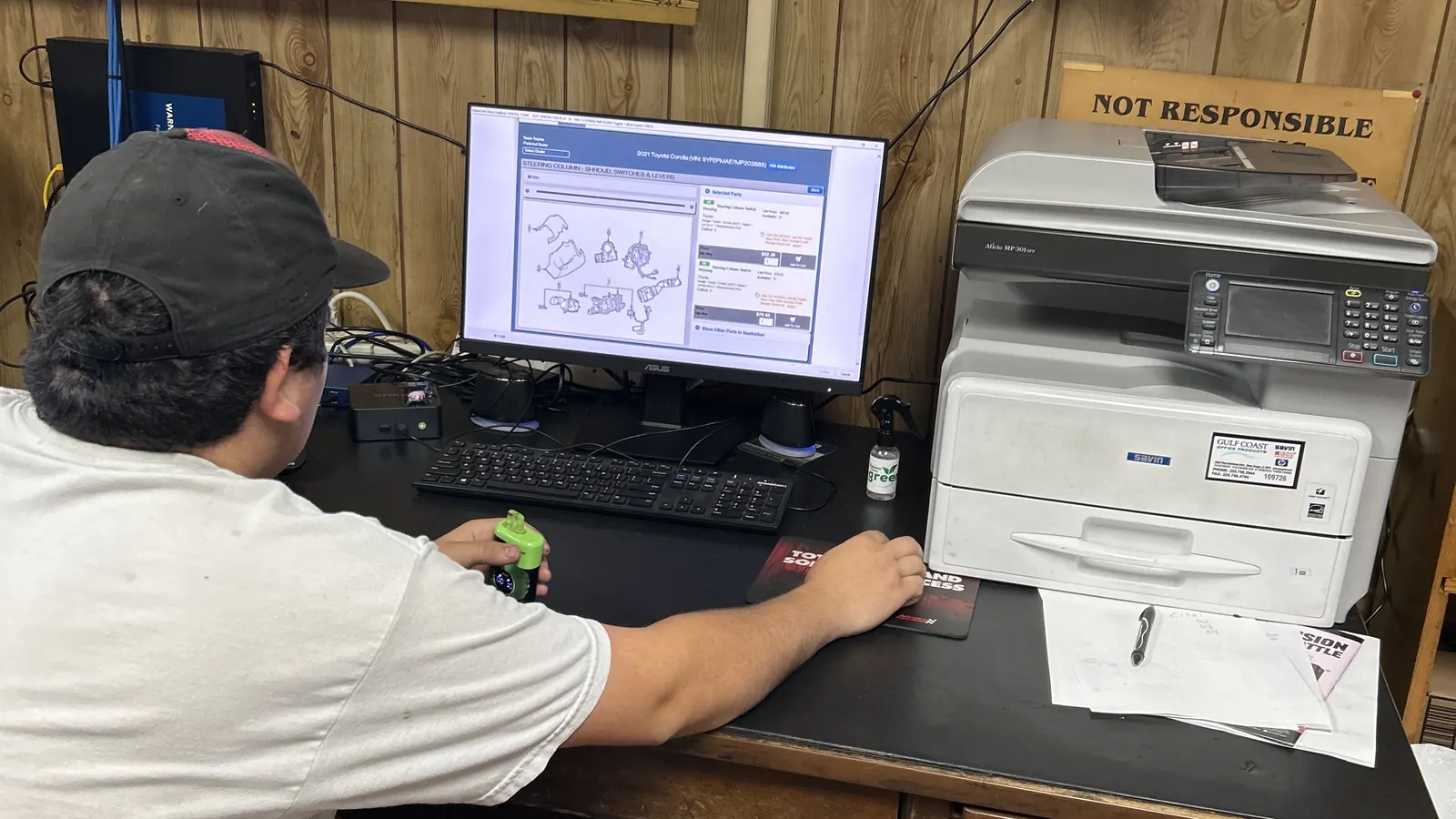
The most common check engine light causes are a loose or worn gas cap, oxygen sensors, ignition coils and spark plugs, vacuum leaks, mass airflow sensors, thermostats and catalytic converters. Several of these share the same symptoms, which is why a code alone rarely tells the whole story and testing comes before parts.
A gas cap that isn’t clicked tight lets fuel vapor escape, and the evaporative (EVAP) system flags it as a leak. Tighten the cap until it clicks and give it a few days, since the light often takes several trips to turn off. If it stays on, a cracked hose or a stuck valve may be the real leak.
Expert tip: Spark plugs on many engines are due somewhere between 60,000 and 100,000 miles, and worn plugs are a common reason an ignition coil starts to fail. If your car is near that mileage and the light comes on with a misfire code, ask whether the plugs are due. Our oil change and maintenance page covers how to keep up with the schedule.
With a steady check engine light and a car that drives normally, you can usually keep driving for a short time while you schedule a diagnosis. With a flashing light, rough running, overheating or a loss of power, pull over and stop driving. Either way, a quick test tells you which situation you’re in.
Driving for weeks with a steady light has a cost of its own. A weak oxygen sensor can hurt fuel mileage, and a second problem can show up while the light is already on, so you won’t get a new warning. Summer heat and stop-and-go traffic on College Drive also push a borderline part to show itself.
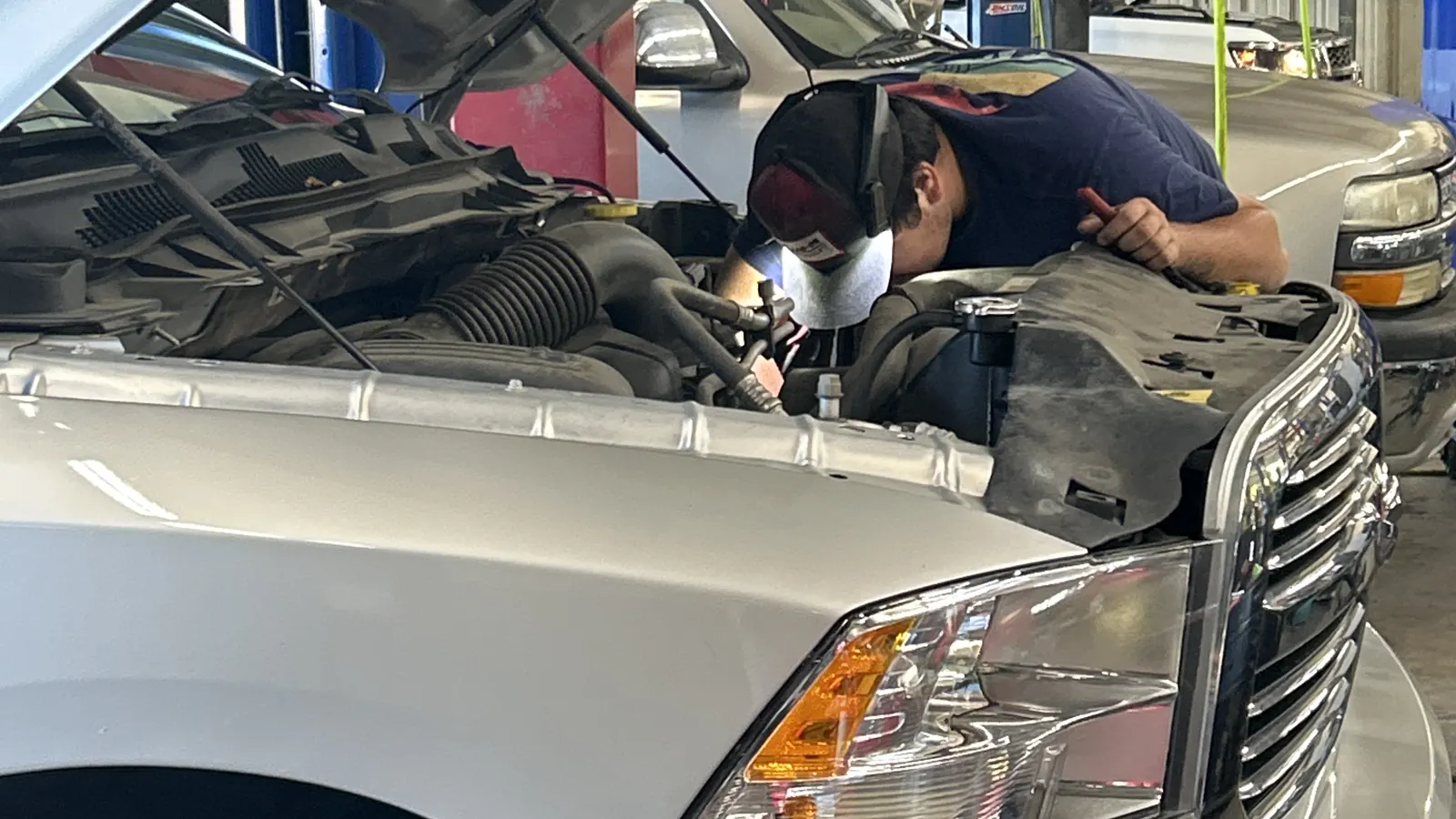
Freeze-frame data is a snapshot the computer saves the moment it sets a code: vehicle speed, engine temperature, load, fuel trim and more. Live data shows those same sensor readings while the engine runs. Together they show what the car was doing when the fault happened, which points the testing in the right direction.
A lean code, for example, can come from a vacuum leak, a dirty mass airflow sensor or a weak fuel pump. If the fault set at idle on a hot afternoon, that points toward a vacuum leak, and a smoke test confirms it. That is the difference between a quick code read and a full check engine light diagnosis.
Expert tip: Before you come in, jot down when the light came on: hot or cold engine, highway or city, after a fill-up or a hard rain. Those details line up with the freeze-frame data and can shorten the hunt for an intermittent problem.
A check engine light that comes on and then goes off usually points to an intermittent fault. The computer turns the light off after several trips without the problem, yet the code stays stored in memory. Loose connections, a failing sensor, a small vacuum leak or a misfire that only happens under load are common causes.
Intermittent problems are the hardest to chase because the car may act perfectly in the bay. Stored codes and freeze-frame data record what happened when nobody was watching. Heavy rain plays a part too, since moisture in a loose connector can set a code that clears once it dries. A fender-bender can do the same by pinching a wiring harness or cracking a sensor, and with our collision repair shop under the same roof, the body work and the diagnosis happen in one place, with no second shop.
Clearing a code with a scan tool or by disconnecting the battery turns the light off, yet it also wipes out the stored code and freeze-frame data a technician needs. The problem is still there, and the light will come back. Leave the light on and let the diagnosis start with the evidence intact.
The cost of check engine light diagnostics depends on the code, how many systems are involved, and whether the problem is steady or intermittent. A loose gas cap takes minutes to confirm, while an electrical fault can take longer to trace. You get a clear estimate before any work starts, and nothing is done without your approval.
Once we know the cause, we explain the repair, what it costs, and whether it needs to happen now or can wait. If it turns out to be a sensor, coil or thermostat, our general auto repair team takes care of it, and other dashboard warnings, like the ABS light, are covered on our brake repair page. Gordon & Sandifer has given Baton Rouge drivers that kind of straight answer since 1956.
Expert tip: If a parts store reads your code, write it down and leave the light alone. The code gives us one more clue, and the freeze-frame data stays in place for testing.
Gordon & Sandifer is at 3825 Perkins Rd, Baton Rouge, LA 70808, close to Acadian Thruway and Southdowns Shopping Center. We’re open Monday through Thursday from 7:30 AM to 5:00 PM and Friday from 7:30 AM to 3:00 PM. Call (225) 343-3427 to tell us what the light is doing, or stop by.
If it’s a quick code check, settle into the waiting area with a cup from the coffee bar, put the TV on or catch up on email over the Wi-Fi, and we’ll come find you with what we learned. We’re about a mile from University Lake, Rouzan and Zee Zee Gardens. See our contact page for directions, or browse our auto repair services and our page on Baton Rouge auto repair. If all your car needed was a gas cap clicked tight, that’s exactly what we’ll tell you.